Parametric Writing lets authors buttress their writing by making intent clear with world facts and story arcs. Sentences are tracked with unique IDs in a database list. Each Sentence can be tagged with Rules and Briefs to explain it. That makes it possible to keep the story consistent, and facilitates peer review. The tags quickly tell which plots are throughout the book and what facts are used consistently.
Sentences
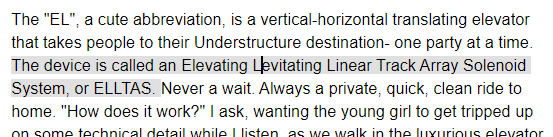
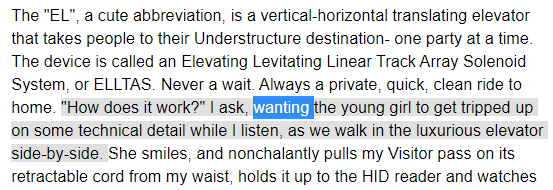
While editing the Story Text, Parametric Writing (PW) suggests sentence boundaries. These can be manually changed. The cursor’s Sentence is shaded grey.
Briefs to Summarize the Story Text
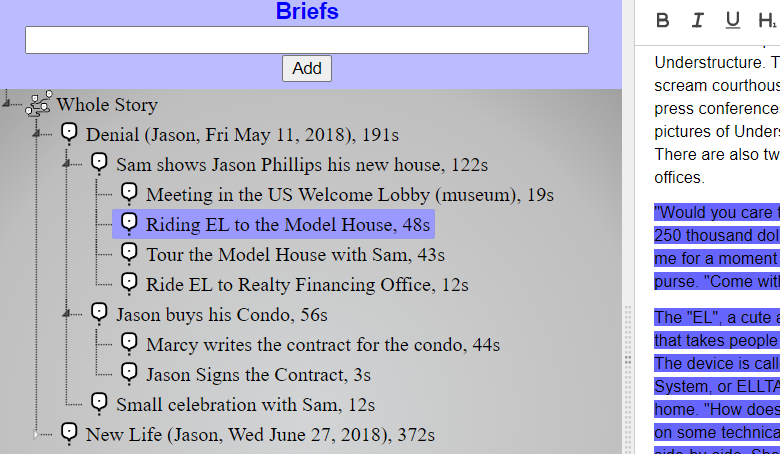
Briefs can summarize Sentences. The Sentences are shaded blue when a Brief is clicked.
Rules define the Fictional World
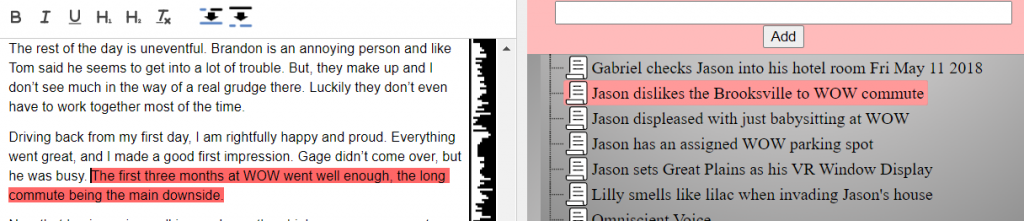
Add Rules to link back story and world facts to specific Sentences.
Why Briefs and Rules
Adding information behind the Story Text lets you and other authors objectively review the text without having the entire book in their concious mind. Chunking one aspect of the story is possible.
This lends itself to putting a book down and returning to it after other projects, or letting another person read through the book. The justification for every Sentence is given next to it, allowing people to understand where the narration is coming from and where it is going.
Improving the Briefs and Rules of a story provide easier, less draining work than writing drafts of new work. Comparable to spell and grammar checking, asigning Rules and using them in more areas becomes a mechanical task any editor can perform. The Rules and Briefs provide a style reference that can be used, laying out the ideas and plots that should be focused on in the book.
User Manual
The manual is available as a webpage or PDF and explains everything in more detail. Knowing what you just read above will make the User Manual a quicker read and puts you in a position to consider how the functionality of Parametric Writing can be put to good use.